
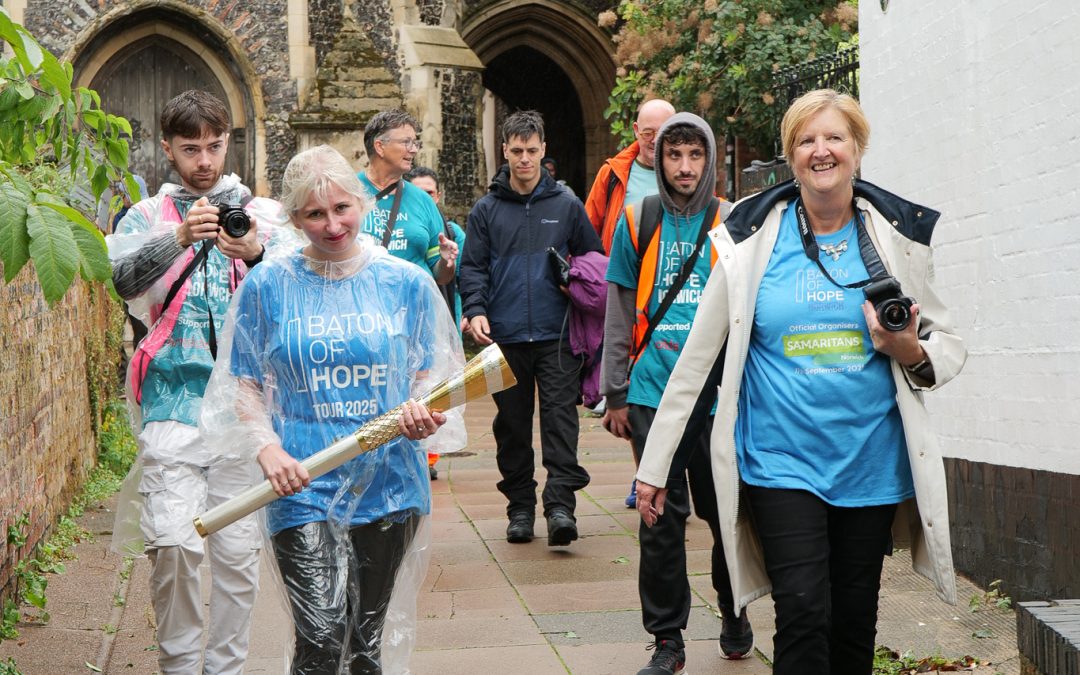
An emotional day full of grief, love and – above all – hope.
Just in case you’re reading about the Baton of Hope for the first time, a recap: it is the UK’s largest suicide prevention initiative and the world’s first physical icon of mental health. It was founded in 2022 by two bereaved fathers and has an ambitious vision: a world free from suicide. It is an unparalleled opportunity for those affected by or working to prevent suicide to come together, in cities across the UK, to raise awareness. We were delighted to be asked by local organisers Norwich Samaritians to host one of the stops on the Norwich leg of the tour, in recognition of the work we do to give hope to men and those around them.
The Baton is a symbol of hope that things can and will change. That, one day, suicide will not be the leading cause of death for men under 50 in the UK, or the leading cause of death for all people under the age of 35. It is an opportunity to ask again why it is that men especially (75% of UK suicide deaths are men) find it so hard to open up? To seek help? To admit that they aren’t coping?
In the months leading up to the event, we printed hundreds of postcards asking a simple question: What does hope look like? We distributed these far and wide in the hope that we would learn how our support has helped those connected to MensCraft, what else people might need, and give others in distress the hope that things can change.
Baton of Hope: The Big Day
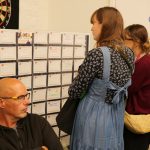
With a good-sized event space in the centre of Norwich, we decided we could do more than just host the Baton and its bearers for the allotted hour. We opted to open The Dojo from 10-4, running a sort of extended Pit Stop, inviting anyone who wanted to come to experience the famous MensCraft warm welcome, grab a cuppa, have a chat, and add their message of hope to either a postcard or our newly-installed blackboard to create a ‘wall of hope’.
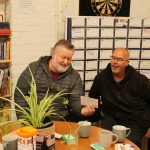
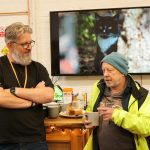
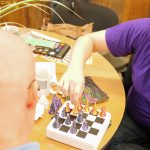
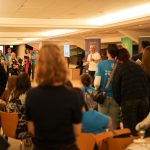
Despite the heavy rain, staff and members from across the county came early to help set up, and soon The Dojo was buzzing. It was a joy to see members from Thetford playing chess and chatting with those from Great Yarmouth. One of our newest trustees, Pranvera, spent hours immersed in conversation with staff, members and partners. The MensCraft team variously manned the refreshments, stood outside in the rain to warn visitors about the slippery flagstones, and talked to newcomers about what we do.
At midday, BBC Radio Norfolk reporter Jack arrived to do a live broadcast interview with Ed about our involvement in the event. You can listen to that interview below.
By 1pm, the early arrivals had come and gone, giving grateful staff the opportunity to grab some lunch and catch up in the brief lull.
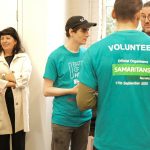
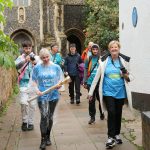
Just before 2pm, an advance party of Samaritans volunteers arrived with the Baton stand, ponchos dripping wet from the incessant rain that had failed to dampen their spirits. And then, to claps, cautious smiles and wet eyes, the Baton itself was here, along with many more in blue t-shirts. We welcomed our soggy guests, let them rest their weary legs, warmed them with tea and our collective embrace, recognising the significance of bearing a beautiful object that symbolised hope but also unimaginable loss and sadness.
And what an object it is: a torch-like baton, crafted with care and attention to detail by Thomas Lyte, goldsmiths and silversmiths to King Charles III, and makers of the Emirates FA Cup and other exquisite trophies. Fittingly precious, appropriately heavy – a presence that drew everyone’s gaze.
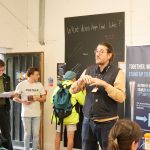
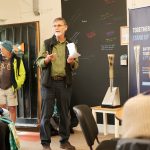
Once our visitors were warm, fed and settled, MensCraft Chief Executive Shantinara Allard welcomed them before giving a reading of What If…, a piece he wrote in memory of his cousin, tragically lost to suicide, in which he movingly conveys the difference that services like MensCraft could make to men like “Scott”, if only they had been able to access them. Read it at the bottom of this page.
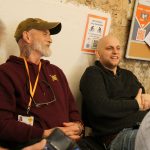
For the next 45 minutes, the Baton-bearers and their friends and family sat and talked or reflected quietly. It was an honour to host them on what was clearly a very emotional day. And then, with little fanfare, the Baton and its bearers were gone, on to the next stop on their journey.
Wrapping up the day
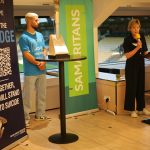
We were lucky enough to be invited to the closing ceremony at Carrow Road stadium, where we met friends and colleagues from other organisations doing “hope work”, from established players like The Sue Lambert Trust and The Matthew Project to the very new Say It Lad – a WhatsApp-based service that encourages men to give voice to their thoughts as a way to immediately unburden themselves, and hear others’ voice notes to know they are not alone. Most importantly, there was powerful testimony from those affected by suicide and suicide-survivors themselves.
The event galvanised us to:
- meet more regularly in person as a staff team;
- look for more local opportunities for multi-agency working; and
- think about how we can develop our services to meet growing and changing need.
Well done to everyone involved with the Baton of Hope 2025 tour.
What if…
Scott moved around a lot as a child. He was the son of an army officer – an unhappy, abusive man. His mum was smart and fierce but fearful and abused.
The oldest of three brothers, Scott knew little of life outside the army and signed up as a military policeman. Over 20 years he was exposed to the horrors of Bosnia, Iraq, Afghanistan and Northern Ireland. For a man who had a good heart and a bright mind, these experiences deeply impacted on him.
In his late forties, Scott left the army and struggled with the transition into civilian life. A gentle man with a big heart.
Three marriages that lasted only a short time. Poorly paid work and long hours, often night shifts. High levels of debt and poor choices in friendships.
What if he had access to a service where he would be listened to and his distress taken seriously? He may have been better able to work through the adverse childhood experience and the distress of picking up the pieces of a crime scene or explosion. What if he had accessed therapeutic provision known for its effectiveness addressing complex and deeply-felt trauma?
What if, through this provision, he could have addressed the sabotage of his three marriages and friendships, the significant financial difficulties, and found encouragement to access and his keep his appointments with clinical mental health services?
What if he had joined a peer-support group to access mutual support and dive deeper into shared experiences?
What if Scott had known he could get advice and support on maintaining a connection with his children? What if he had been able to work out how to be the father he wanted to be, despite the separation from the mothers?
What if Scott could have found an activity that gave him a reason to get out of bed and start the day with enthusiasm – with meaning and a sense of purpose, satisfaction – however hard it was sometimes? To participate in something where he could build connections and friendship with others, and where the activity contributed to the community and he felt valued?
What if Scott had been able to rekindle his fondness for the outdoors? Gathering around a fire pit and cooking a meal with others in the woods, enjoying both the silence and the sharing of feelings; the mutual support and encouragement and occasional challenge.
What if Scott had known that there was a place to work with all this where many similar lived experiences were available for him to learn from and mutually support? To be open to alternative perspectives on what it is be a man, son, brother, father, friend?
What if, and if only.
Recent Comments